A Phase 2 Clinical Trial Evaluating the Safety and Efficacy of Delandistrogene Moxeparvovec (SRP-9001) in Patients with Duchenne Muscular Dystrophy (DMD)
Published 04/27/23
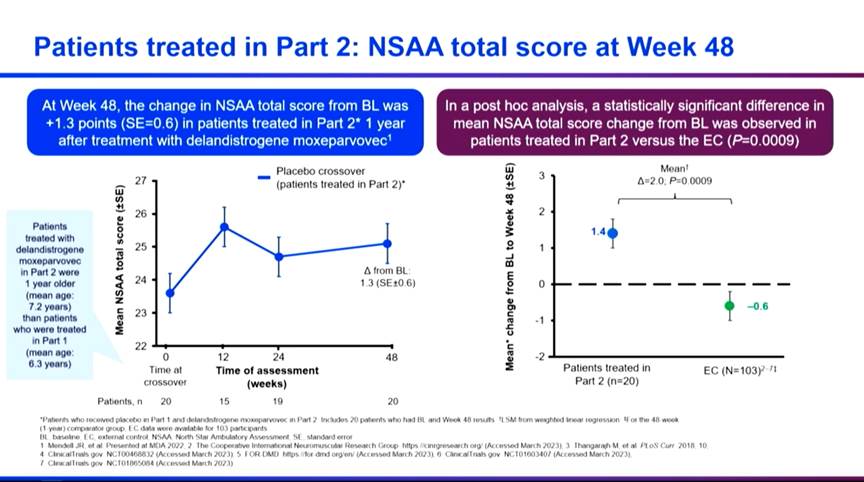
Using an external cohort (EC) comparator, Dr Perry Shieh presented data from Study 102, a phase 2 trial in patients with DMD treated with delandistrogene moxeparvovec (SRP-9001) up to 2 years post-infusion. In Part 2, 48 weeks post-infusion, NSAA score increased by 1.3 points and was significantly increased compared with the EC. Additionally, when the EC was used to perform an analysis of patients treated in Part 1 a statistically significant difference in the median NSAA score was found suggesting maintenance of motor function 2 years post-infusion. While further investigations are ongoing, this data adds to the growing body of evidence demonstrating the safety and efficacy of delandistrogene moxeparvovec.
Safety of Foslevodopa/Foscarbidopa During Optimization and Maintenance Treatment: Post Hoc Analysis of a Phase 3 Trial
Published 04/25/23
AbbVie’s new soluble formulation of levodopa-carbidopa prodrugs (foslevodopa-foscarbidopa; ABBV-951), intended to treat patients with advanced Parkinson’s disease via 24-hr/day continuous subcutaneous infusion, was recently declined approval by the FDA citing safety concerns for its portable infusion pump. Phase 3 post-hoc analysis revealed that the most common TEAEs occurred at generally higher rates in the optimization vs the maintenance phase of the trial. These data may reflect patients’ ability to adapt to subcutaneous delivery over time, and a need to fine-tune dosage.
Safety and Efficacy of Ataluren in nmDMD Patients from Study 041, a Phase 3, Randomized, Double-Blind, Placebo-Controlled Trial
Published 04/25/23
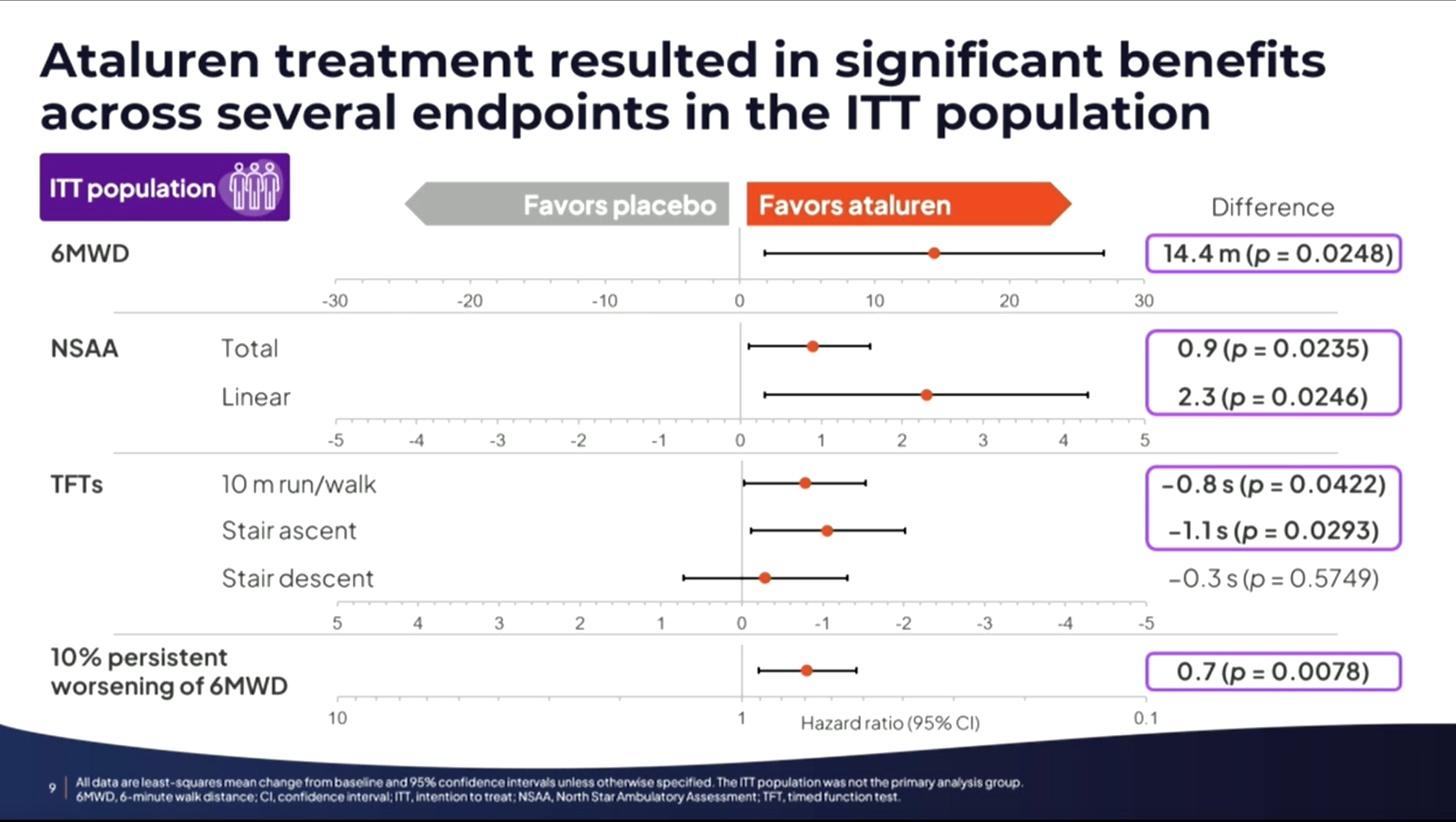
Ataluren, while not approved in the US is conditionally approval in the EU. During Tuesday’s Clinical Trials Plenary session, Dr Jeffrey Statland presented data from Study 041, a second phase 3 clinical trial designed to generate additional data requested by the EMA. The 72-week study, demonstrated that compared with placebo, ataluren significantly slowed the rate of decline in 6MWD in the ITT population and in a subgroup of boys with a 300-400m 6MWD. Significant benefits were also observed in the secondary endpoints of NSAA scores and TFT. Ataluren was well tolerated with the majority of AEs being mild to moderate. The data were consistent with the established efficacy and safety profile of ataluren and may be used to support full approval of ataluren in the EU.
Topline readout for TRAILBLAZER-ALZ 4, a head-to-head trial comparing donanemab and aducanumab in patient’s with early symptomatic Alzheimer’s disease
Published 04/25/23
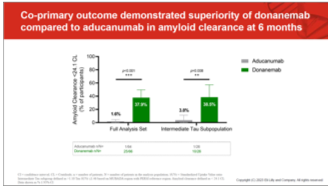
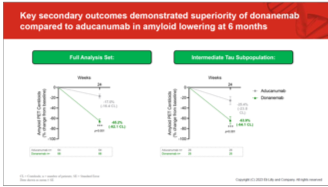
In the first head-to-head trial comparing anti-amyloid therapies, donanemab was superior to aducanumab across primary and secondary endpoints at Week 24 in both the full population and intermediate tau subpopulation. The safety profiles of the treatments were consistent with previously published results, but a comparison of ARIA incidence indicated that the speed and depth of amyloid removal is not driving ARIA occurrence.
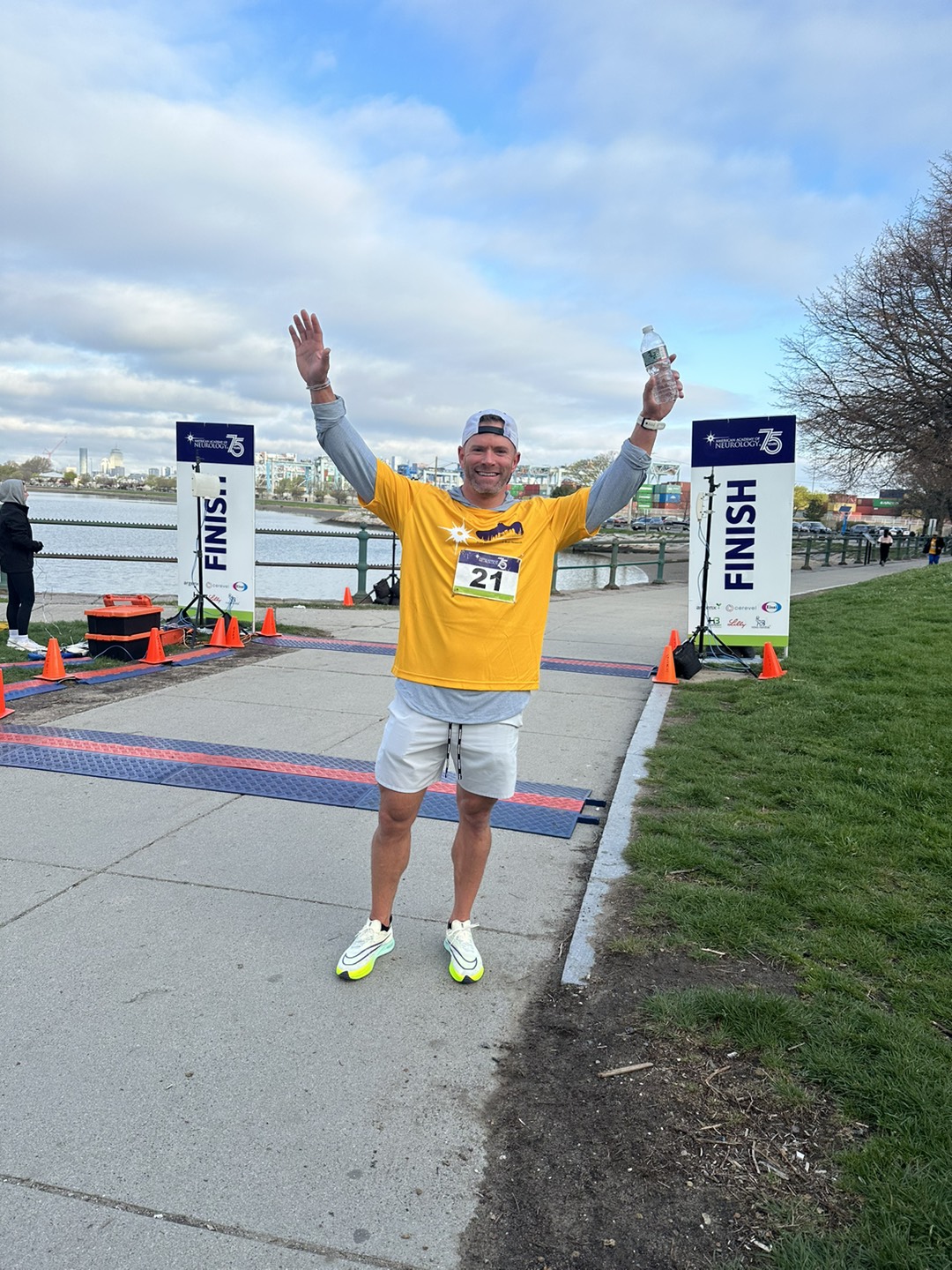
Boston Waterfront 5K
Published 04/25/23
Our heads are buried in the latest data this week, but we have our hearts dedicated to advances in brain health as well. This morning we woke up with the sun to run the 5K along Boston waterfront. Anything in the name of research!
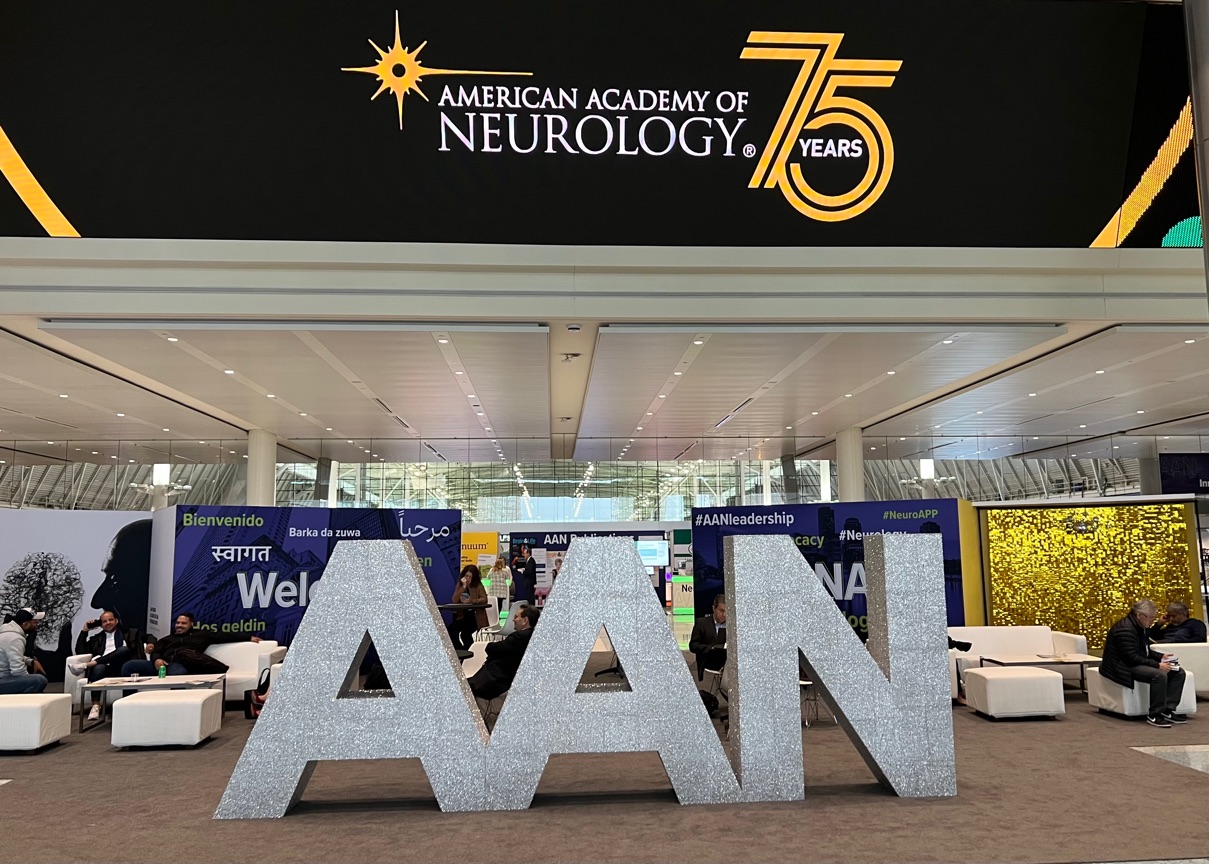
Welcome to AAN 2023
Published 04/23/23
We arrived yesterday, and hit the ground running. We’re so excited to be here for the 75th annual meeting and milestone anniversary celebration. We look forward to experiencing and talking about all of the most relevant data!
Want to Know How to Catch and Keep a Neurologist’s Attention?
You Just Saw It: Ask A Question
Published 04/21/23
Kat Mallanda has over a decade of personal experience in assimilating attitudinal market research and a bounty of direct knowledge. This, in addition to feedback from numerous career advancement counselors demonstrates that it is widely known that Neurologists are investigative, social, and realistic. And this makes perfect sense when you think about what it takes to work with disorders of the CNS, which encompasses the brain and spinal cord (and connects to peripheral nerves and muscles). It’s a common belief that the CNS remains the ultimate puzzle, making the nature of neurology investigative not only in the lab, but in the clinic. Many CNS conditions are challenging to diagnose; a large number require trying one treatment and adjusting (including switching and adding on) until the optimal therapeutic effect is reached for that patient. It’s no surprise that neurologists possess higher levels of openness to experience compared to non-neuroscience specialties1 Give them a puzzle to solve that activates multiple intelligences, and you will have a captive audience.
CNS complexity means that finding a “typical” CNS patient is rare and so treatment approaches are often tailored. Outcomes, too, are individualized, quite frequently based on patient-reported outcomes vs hard data. This fine-tuning can be frustrating to both neurologists and patients—and that’s where neurologists’ sociability emerges as a profound strength. Eliciting feedback from patients and then translating a patient’s metaphors and imprecise descriptions into valuable information that can be used to assess treatment response requires building the kind of trust and rapport that only comes from deep listening and being fully present to what is often a subjective and confounding expression of a patient’s personal experience. Being encouraging and keeping the patient—and their families—focused on a better future with care and compassion taps directly into the neurologist’s propensity for sociability. They also wisely know that not all CNS puzzles can be fully solved, but improvement—more specifically, the reduction of suffering—is their guiding goal. Despite the very real burdens of empathy fatigue present in this dynamic, on the whole, neurology is the specialty most likely to take the time to work with a patient to understand symptoms and their causes.1
But there is a cost in providing such individualized care: we have a global shortage of neurologists, due in large part to an aging population increasingly suffering with neurodegenerative conditions and a cascade of referrals that do not necessitate neurologist intervention. One solution that has helped optimize resource utilization has been Teleneurology (TN). The first use of TN was to evaluate stroke at hospitals without neurologists on site. Telestroke evaluations showed noninferiority compared with face-to-face encounters, making TN a realistic interventional tool in managing limited resources. Adoption of TN was fueled by COVID-19. In 2020, neurology practices had one of the highest uptake rates for telemedicine (47.9% of total visits) and a smaller decline in total visits when compared with other specialties as neurologists became comfortable with the fact that many time-intensive evaluation and management services can be performed remotely.
This gives us all a lot to think about, which is great because neurologists really like to exchange ideas.2 In fact, one of the most successful in-person commercial ad boards I’ve ever seen featured breakout groups where the neurologists worked together on their group’s assignment of solving a unique problem. Of course it worked—the format fulfilled their investigative, social, and realistic inclinations!
When BGB Group develops communications for neurologists, we keep their attributes top of mind. We prioritize their brain’s need to be engaged vs “told” (investigative), ensure patient centricity is top of mind (social), and lastly, we don’t overpromise (realistic). The result? BGB Group creates communications and campaigns that res- onate with a neuro’s core attributes and values, which in turn inspires action.
As creators of content—both in words and visuals—the Team at BGB Group operates quite similarly to neurologists.
We investigate the data combined with customer insights to find those core differentiators neurologists seek. In pharma communications, storytelling is highly collaborative, and therefore social. And in finding the balance between what you’d want to say and what regulators allow to be said—well, that’s realistic
There you have it: BGB vibes on the fact that neurologists are investigative, social, and realistic, because in living at the intersection of Science + Creativity, so are we; what about you
References
- Surbeck W, Samuel R, Spieler D, et al. Neurologists, neurosurgeons, and psychiatrists’ personality traits: a comparison. Acta Neuro- chir (Wien). 2020;162(3):461-468. doi:10.1007/s00701-020-04233-9
- Griffin JW. Training matters in neurology. Nat Rev Neurol. 2006;2:345. doi:10.1038/ncpneuro0240